
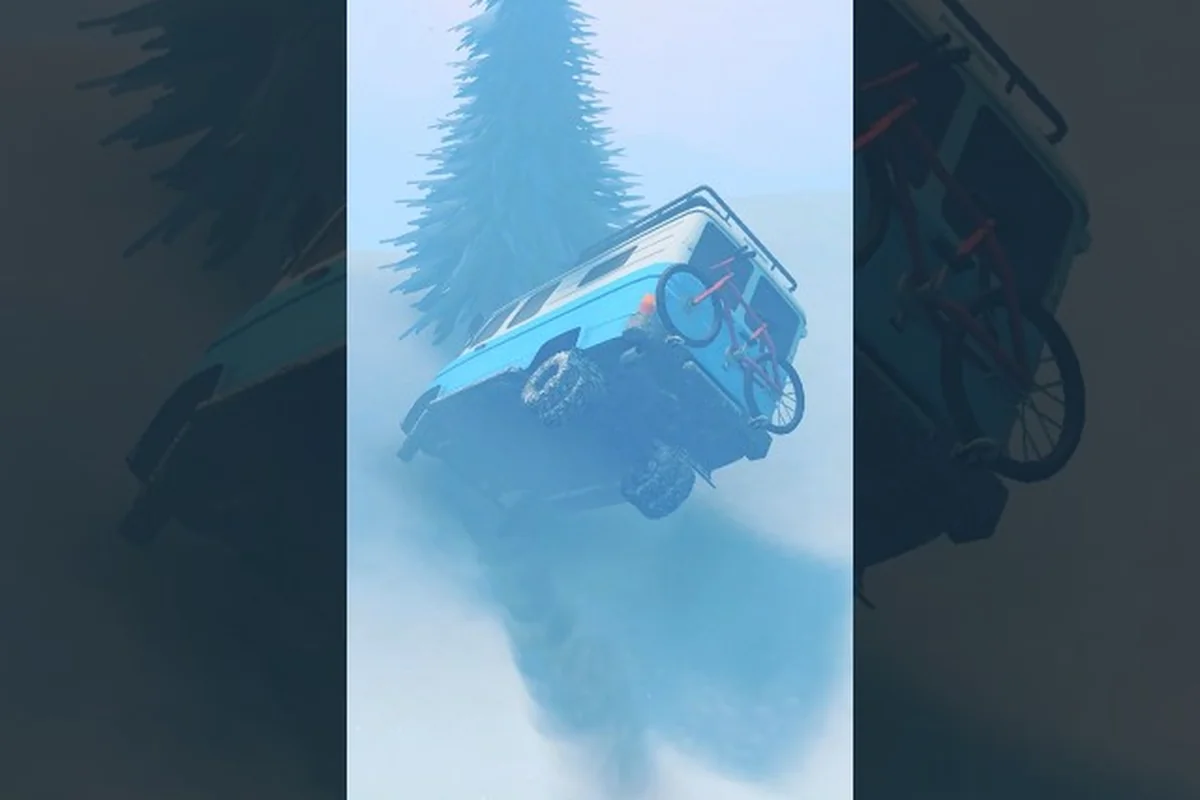
Picking the right SUV in the wilderness determines whether you crawl home in triumph or call for a tow. This over the hill suv guide breaks down every machine in the garage, weighs raw vehicle stats against real terrain demands, and pairs each chassis with the biome where it actually shines. From deep mud ruts to icy mountain passes, rock-strewn ascents to submerged river fords, the difference between frustration and freedom often comes down to one good decision at the vehicle select screen.
The over the hill suv guide is built for drivers who already know the basics but want a sharper edge. Every SUV, buggy, and 4x4 truck in the roster handles differently, and the terrain in this game punishes mismatched setups. Mud swallows stock tires, snow demands chains, boulders shred low-clearance chassis, and deep water drowns a careless exhaust. Read the comparisons below, match the stats to your trail, and your next drive will feel like cheating.
Over the Hill SUV Lineup and Core Vehicle Stats
The vehicle roster splits into three families: SUVs, buggies, and 4x4 trucks. Each family leans into a different strength, but every ride shares the same six base stats that govern how it actually performs on the trail. Understanding those numbers is the first step toward picking the right rig, because raw top speed means almost nothing when a chassis bottoms out on a granite shelf at the halfway point of a climb.
The six core vehicle stats are Drivetrain, Tires, Clearance, Weight, Fuel Economy, and Water Fording Depth. Drivetrain describes whether a vehicle runs 2WD, AWD, or a locking 4WD system with low range, and it directly controls how power reaches the ground on loose surfaces. Tires indicate the factory compound and size, which dictates grip on mud, snow, and rock. Clearance measures the lowest point of the chassis in centimeters, a number that decides whether you belly out on a ledge or roll right over it. Weight affects momentum, which is critical for plowing through soft mud or pushing through deep water, though heavier rigs also sink further in those same conditions. Fuel Economy matters less on short trips and a lot more on multi-day expeditions where a stranded tank is a real possibility. Water Fording Depth caps how deep a river crossing can be before the engine swallows and the cabin floods, and this single stat is the difference between a bold river shortcut and a salvage job.
Below is a quick reference table for the current SUV-class roster. The exact per-vehicle numbers in your version of the game may differ after patches, so treat the figures as a directional guide rather than gospel.
| Vehicle | Drivetrain | Clearance | Water Fording | Best Terrain |
|---|---|---|---|---|
| Ranger X | AWD | 32 cm | 60 cm | Mixed trails |
| Outback LX | 4WD + Locker | 28 cm | 50 cm | Rock crawling |
| Mesa SR | AWD | 35 cm | 75 cm | Water crossings |
| Tundra Pro | 4WD + Locker | 30 cm | 55 cm | Snow and ice |
| Hillcrest GT | AWD | 26 cm | 45 cm | Forest and gravel |
| Canyon RS | 4WD + Locker | 34 cm | 80 cm | Mud and silt |
A broader look at the full vehicle list, including trucks and buggies, lives in the companion vehicle list article, which covers unlock conditions and pricing for every chassis in the game. For now, focus on the table above. The takeaway is straightforward: the Mesa SR and Canyon RS dominate soft terrain, the Outback LX and Canyon RS own the rocks, the Tundra Pro handles snow better than the rest, and the Mesa SR takes the deepest water by a wide margin.
SUV vs Buggy vs 4x4 Truck: Picking the Right Family
Before drilling into terrain-specific picks, it helps to step back and compare the three vehicle families side by side. The over the hill buggy guide angle matters here, because buggies often outperform SUVs on technical terrain despite their lower weight and reduced comfort. Trucks sit at the other end of the spectrum, trading nimbleness for raw pulling power and cargo capacity. Each family has a personality, and matching that personality to your driving style saves a lot of frustration.
| Family | Weight Class | Strength | Weakness | Driver Profile |
|---|---|---|---|---|
| SUV | Medium | Balance of comfort, clearance, and cargo | Jack-of-all-trades, master of none | Explorers who swap biomes often |
| Buggy | Light | Agility, low center of gravity, high approach angles | Poor cabin, low fuel range, vulnerable to side impacts | Technical drivers who chase lines |
| 4x4 Truck | Heavy | Towing, pushing through resistance, deep mud | Slow acceleration, wide turning radius, heavy fuel use | Haulers and expedition drivers |
The SUV class is the safest pick for new players because it forgives mistakes and rarely strands you in a biome it cannot handle. Buggies reward skill: a good driver in a buggy can take a line an SUV driver would not even see, and the lower weight keeps the tires on top of soft surfaces instead of sinking in. Trucks shine when the trail gets ugly and you need momentum or a tow hook, but they drink fuel and overheat on long climbs. Pick the family first, then the specific chassis within it.
When to Choose an SUV
SUVs are the default recommendation for the first 20 hours of play. The cabin protects against weather, the cargo space swallows recovery gear, and the drivetrain options cover every biome without forcing a vehicle swap. Choose an SUV when your plan involves back-to-back biomes, when you are still learning trail reading, or when you want one rig for everything. The trade-off is specialization, because a generalist SUV will never be the absolute best at any single discipline.
When to Choose a Buggy
Buggies are for drivers who already know the trail and want maximum feedback from the chassis. The over the hill buggy guide perspective emphasizes approach angles, which buggies dominate, because their short wheelbase and exposed wheels let them pick a line straight up a rock face that an SUV would have to detour around. Buggies also handle better at speed on twisty forest roads, which makes them the weapon of choice for time trials. The downside is exposure: a side-swipe from a boulder or a roll on a steep bank hits much harder in an open cabin.
When to Choose a 4x4 Truck
Trucks are for hauling and recovery. Their extra weight translates into momentum, which is the only thing that carries a rig through the deepest mud and the longest water crossings, and their tow hooks can pull a stranded SUV out of a silt trap in seconds. Trucks also carry the largest fuel tanks, which makes them the right pick for multi-day expeditions where refueling is not an option. The cost is agility, because a truck simply cannot pivot on a tight forest switchback the way an SUV or buggy can.
Best Vehicle for Mud, Snow, Rock Crawling, and Water
Terrain is the real selector. A chassis that is unbeatable on a forest road can drown in a single river, and a rock-crawling champion can sink past its axles in a mud flat. The four biomes below cover the majority of off-piste driving in the game, and the table that follows maps each terrain to its top three picks across all three families.
| Terrain | Top Pick | Runner-Up | Wildcard |
|---|---|---|---|
| Mud and silt | Canyon RS (4WD + Locker) | Mesa SR (AWD) | Heavy 4x4 Truck |
| Snow and ice | Tundra Pro (4WD + Locker) | Ranger X (AWD + chains) | Canyon RS (4WD + Locker) |
| Rock crawling | Outback LX (4WD + Locker) | Canyon RS (4WD + Locker) | Purpose-built Buggy |
| Deep water | Mesa SR (AWD) | Canyon RS (4WD + Locker) | Any SUV with raised intake |
Mud and Silt
Mud rewards weight, aggressive tires, and a locking differential. The Canyon RS checks every box with its 4WD + Locker drivetrain, 34 cm clearance, and dedicated mud-terrain compound that bites deep and self-cleans on every rotation. Approach mud flats at a steady pace without spinning the tires, because momentum is what keeps the chassis floating on top of the soft layer. If the rig stops moving, do not floor the throttle; instead, reverse in your own tracks to build a base, then re-attempt the line at a shallow angle. The Mesa SR is the runner-up because its AWD system and taller sidewalls handle soft silt reasonably well, though it lacks the locker that makes the Canyon RS unstoppable. A heavy 4x4 truck is the wildcard, because its extra mass plows through resistance, but be ready for fuel consumption to spike.
Snow and Ice
Snow flips the usual rules: lighter chassis actually perform better because they do not punch through the crust into the soft layer below. The Tundra Pro is the top snow pick, and for the over the hill best vehicle for snow conversation it sits at the top of every community tier list. Its 4WD + Locker drivetrain combined with factory snow tires generates the kind of bite that keeps the chassis pointed where the steering wheel says to go. Drop tire pressure slightly before long snow expeditions to widen the contact patch and improve flotation, because cold air contracts the rubber and reduces grip on hardpack. The Ranger X is the runner-up once you fit chains, and chains in this game are a cheap upgrade that transform a generalist SUV into a credible winter rig. The Canyon RS is the wildcard, and it works surprisingly well on packed snow because its locking differentials keep the rear end from sliding sideways on off-camber sections.
Rock Crawling
Rocks demand low-range gearing, maximum clearance, and steel underbody protection. The Outback LX is the canonical answer for the over the hill best vehicle for rock crawling question, because its 4WD + Locker system with low range gives the driver fine control at crawling speeds, and its 28 cm clearance, which sounds modest on paper, is augmented by reinforced skid plates that protect the oil pan on sharp edges. Pick your line before the climb starts, because mid-line corrections on rock are how axles get bent. The Canyon RS is the runner-up, and it offers a slightly higher clearance number at the cost of a longer wheelbase that occasionally hangs up on diagonal ledges. A purpose-built buggy is the wildcard: its short wheelbase and high approach angles let it climb lines that no SUV can match, but the exposed cabin turns a tip-over into a hard reset.
Water Crossings
Water rewards height, sealed intakes, and patience. The Mesa SR is the clearest pick for the over the hill best vehicle for water crossings question, because its 75 cm fording depth is the highest in the SUV class, and its AWD system avoids the differential breathers that can suck water into the drivetrain during deep crossings. Walk the bank first if the water is moving, because the depth reading on the surface is not always the depth at the deepest point, and a single submerged shelf can be the difference between a clean ford and a dead engine. Enter the water at a slow, steady pace without creating a bow wave in front of the grille, because that wave rolls back into the airbox and short-circuits the ignition. The Canyon RS is the runner-up with an 80 cm rating, but its locker breathers are vulnerable if the water rises above the bottom of the axle housing. A raised-intake SUV is the wildcard, and it works, but the upgrade is expensive and the chassis is still limited by its stock fording depth.
Upgrades, Tires, and Tuning That Change the Math
Stock configuration is rarely the final word, because the upgrade tree in this game lets a clever driver turn a generalist SUV into a terrain specialist. The most impactful upgrades are Tire Compound, Suspension Lift, Engine Tune, Differential Locker, and Intake Reroute. Each one shifts the balance of the chassis in a specific direction, and the order in which you buy them matters, because the early upgrades deliver bigger gains per pebble than the late-game ones.
| Upgrade | Effect | Terrain That Benefits Most | Cost Tier |
|---|---|---|---|
| Tire Compound | Adds grip on loose surfaces | Mud, snow, gravel | Low |
| Suspension Lift | Adds 4-8 cm clearance | Rock, water, ruts | Medium |
| Engine Tune | Adds low-end torque | Mud, water, steep climbs | Medium |
| Differential Locker | Forces both wheels to spin together | Mud, rock, snow | High |
| Intake Reroute | Raises the airbox above the hood line | Water crossings | High |
The smartest first purchase is almost always Tire Compound, because the right rubber multiplies the effectiveness of every other system on the vehicle. Mud tires on a stock SUV make it feel like a different machine, and snow tires do the same for winter biomes. Suspension Lift comes next, because clearance is the most common reason a vehicle gets stuck on a line that should have been easy. Engine Tune and Differential Locker are mid-game priorities, and the Locker in particular turns a struggling chassis into a confident one on technical terrain. Intake Reroute is a late-game luxury for water-focused drivers, and it should be the last upgrade on the list unless the player is building a dedicated river rig.
Recovery gear also matters, and the right tool can save a stranded SUV. The companion tool loadout article covers winches, tow straps, and traction boards in detail, and it is worth pairing with this guide before a long expedition. A well-equipped driver is rarely the one who gets stuck, and when they do, they self-recover in minutes instead of waiting for help.
Driving Tips and Terrain Reading
Knowing which SUV to pick is only half the battle. The other half is reading the terrain in front of the bumper, because even the best rig in the game gets stuck if the driver points it at the wrong line. Three habits separate consistent drivers from frustrated ones, and each habit compounds over time.
First, look as far ahead as the visibility allows, because the line through a mud flat or a rock garden is set by what happens 50 meters past the current position, not by what is directly under the wheels. Drivers who stare at the hood get stuck on obstacles they could have detoured around. Second, modulate the throttle before the obstacle, not on it, because a steady approach keeps weight on the driven wheels and prevents the kind of wheelspin that digs a chassis into a hole. Third, use the momentum you have and avoid building more, because excess speed on technical terrain turns a recoverable slide into a roll.
Switching into the right gear is also part of the rhythm, and the new player tips article breaks down low range versus high range in detail. As a quick rule, low range is for slow technical sections where you want fine control of the throttle, and high range is for open trails where speed matters. Switching at the wrong moment can stall a climb or overshoot a line, so practice the shift in a safe area before relying on it in a tough biome.
When to Bail Out and Re-Route
A good driver knows when a line is not going to work, and bailing out before the chassis gets high-centered is a skill worth more than any upgrade. If the front wheels stop climbing and the rear begins to spin, the rig is at the edge of its traction limit, and another second of throttle will dig it in further. Reverse in the tracks, pick a wider or shallower approach, and try again. The same principle applies to water crossings: if the water reaches the headlights before the opposite bank, abort and walk the line again, because deeper water over a hidden shelf can swallow the engine in seconds. The official Steam page for over the hill describes a wide range of biomes inspired by real-world locations, and the safer approach is to assume every river has a surprise shelf until proven otherwise.
Frequently Asked Questions
Which SUV is the best all-rounder in the game?
The Ranger X is the strongest all-rounder because its AWD system, 32 cm clearance, and balanced tire compound handle every biome without major weaknesses. It is not the absolute best in any single discipline, but it is consistently in the top three across mud, snow, rock, and water. Pick the Ranger X if you want one vehicle that works for the entire game without forcing swaps.
Should I buy a buggy before finishing the tutorial region?
No, because buggies are optimized for drivers who already know how to read terrain, and they punish mistakes with cabin exposure and limited fuel range. Stick with an SUV through the first 10 to 15 hours of play, then buy a buggy as a second vehicle once you understand line choice. The upgrade path described earlier applies even more strongly to buggies, which depend heavily on tires and lift to stay competitive.
Do tire upgrades stack with weather conditions?
Yes, because the tire compound rating in the stats screen reflects the base grip, and weather conditions multiply that grip by a hidden modifier. Dry gravel with mud tires is only marginally better than with all-terrain tires, but wet mud with mud tires is dramatically better, and the gap widens further in deep snow. This is why compound choice matters more than engine power in long expeditions.
Can an SUV cross the same water as a truck?
Usually, but the fording depth rating is the hard ceiling, and every chassis has a different number. The Mesa SR matches most trucks at 75 cm, and the Canyon RS exceeds several trucks at 80 cm, so vehicle class is not a guarantee of water performance. Always check the rating on the stats screen before attempting a deep crossing, because a submerged airbox kills the engine regardless of drivetrain class.
How do I unlock the higher-clearance SUVs?
The high-clearance SUVs are gated behind trail completion and pebble milestones rather than a flat currency purchase, according to community data reported by players on the official FAQ thread. Complete the corresponding biome's longer trails, collect enough pebbles, and the chassis appears in the dealership. The Canyon RS in particular requires finishing the mud-basin expedition chain, so plan the route accordingly.
Choosing the right SUV comes down to matching chassis to terrain and tuning to driving style. The Canyon RS owns mud and rock, the Tundra Pro owns snow, the Mesa SR owns water, and the Ranger X is the safe pick for drivers who want one rig for every biome. Read the stats screen before every expedition, upgrade tires and lift first, and remember that the best machine in the garage is the one whose driver knows its limits.