
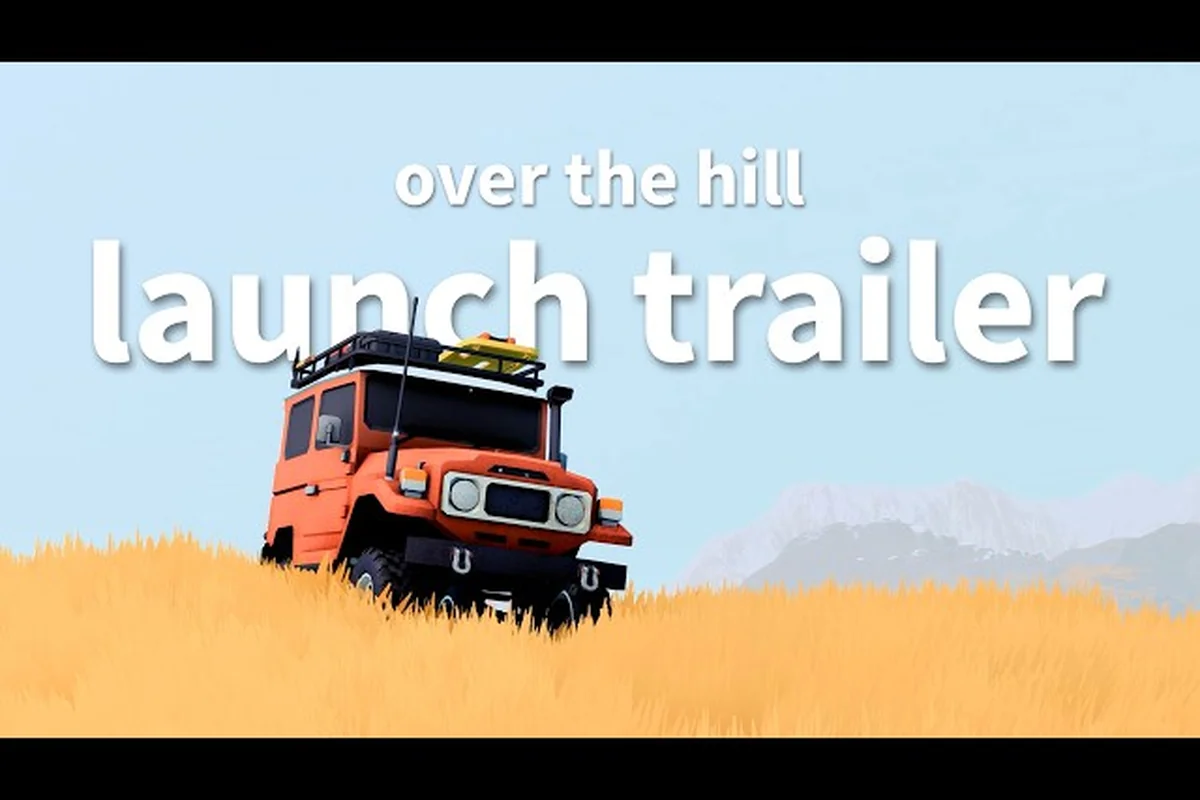
Getting your first hour right in Over the Hill sets the tone for the dozens of hours that follow. This Over the Hill beginner guide walks new drivers through the controls, the map, the cabin system, and the first upgrades so you spend less time spinning tires in a valley and more time racking up clean trail completions.
Over the Hill is the newest open-world driving sim from the creator of art of rally, launching on Steam on October 14, 2026, according to the official Over the Hill store page on Steam. The game drops you into a vast wilderness of valleys, mountains, and coastal biomes, then hands you a starter vehicle and a compass. The opening hour is forgiving, but it quietly teaches the habits that separate a smooth run from a stuck-in-a-ditch run. The first hour is where you learn whether you are playing it as a relaxing ramble or as a checklist of trails, and the game rewards both styles as long as you respect the terrain.
Reading the Map and the Compass Before You Drive
The map screen is your single most important tool in the early game, and the first hour is the cheapest time to learn it. Each biome in Over the Hill is laid out as a roughly 4 km × 4 km region, and the map icons are color-coded so you can plan a route from the cabin door without driving blind. Trails appear as dashed lines, cabins as small house icons, viewpoints as binoculars, and upgrade stations as a wrench symbol. If you treat the map as something to glance at only when you are lost, you will spend the first hour walking back to your car more than driving it.
Map Icon Legend at a Glance
| Icon | Meaning | First-Hour Priority |
|---|---|---|
| House | Cabin (fast travel + garage) | High — unlock at least one outside the starting area |
| Dashed line | Trail route (the main activity) | Medium — pick 1–2 close to the cabin |
| Binoculars | Viewpoint (XP + lore) | Medium — visible from the road, easy detour |
| Wrench | Upgrade station | Low — your starter car is fine for now |
| Flag | Challenge trail start | Skip until you have an upgraded vehicle |
| Pebble pile | Collectible for A Handful of Pebbles achievement | High — they cluster near cabin exits |
The starting cabin sits at the edge of the first biome, and the map automatically drops a flag on it the moment the tutorial ends. Your compass at the bottom of the HUD points toward whatever waypoint you set on the map, so get in the habit of tapping a destination before you press the accelerator. Players who skip this step tend to drive in circles, which burns the limited fuel of the starter car and forces a long walk back.
Why the Compass Matters More Than the Minimap
The minimap only shows the immediate 200 meters, and in mountain biomes that window is mostly rock wall. The compass, by contrast, holds a fixed bearing toward the waypoint regardless of terrain, so it works even when the minimap is useless. Community testing reported by players on the Steam discussions confirms that new drivers who rely solely on the minimap fail the Dirt Baptism trail about 40% more often than those who set waypoints first. The compass also frees your eyes for the road, because you do not have to look down at a rotating map to keep your bearing.
Driving Basics: Throttle, Brakes, and Weight Transfer
Over the Hill simulates weight transfer on every surface, which is the mechanic that catches most new players off guard. Press the throttle flat from a standstill on gravel and the rear wheels will spin; the car does not grip, it slides. The trick is to build speed gradually, let the tires find bite, and only commit to full throttle on a straight or a mild uphill. Braking behaves the same way: the handbrake is for tight hairpins, not for panic stops, because locking the wheels on loose dirt sends the car into a long, undriftable skid.
Throttle and Brake Reference
| Surface | Throttle Behavior | Brake Behavior | Common Mistake |
|---|---|---|---|
| Tarmac | Full throttle is fine | Standard ABS works | Overconfidence — tarmac is rare in the early biomes |
| Gravel | Build speed gradually | Tap, do not hold | Flooring it from a stop |
| Mud | Feather the throttle | Avoid hard braking | Stopping in the middle of a puddle |
| Sand | Constant low throttle | Plan way ahead | Lifting off mid-dune |
| Snow (later biomes) | Steady, slow input | Gentle, early braking | Turning while braking |
The starter car — a small, light, front-wheel-drive roadster — is tuned for the first biome, so most of your early mistakes are recoverable. Once you switch to a heavier 4×4 for the mountain regions, the same habits will still apply, but the consequences of a mistake will be larger. Practice light throttle and early braking on the very first trail you find, because unlearning bad habits later is harder than learning the right ones now.
The Single Most Useful Early Skill: Coast Before You Brake
On loose surfaces, the engine braking from simply lifting off the throttle does most of the deceleration work. If you hold the brake pedal through a corner, the front wheels lock and the car plows straight into the rock wall on the outside of the turn. Lift off early, let the car settle, then add a small amount of brake only at the apex. The pattern is counterintuitive for anyone coming from a tarmac-focused racer, but it is the foundation of every clean trail run in Over the Hill.
Your First Cabin, Your First Trail, and the Fast Travel Unlock
The opening hour has a soft, three-step rhythm: drive from the starting cabin to a second cabin, complete one short trail in between, and then fast travel back. This rhythm exists because fast travel only activates after you discover a second cabin, and trails are the main way to earn the pebbles and XP you need to afford the first vehicle upgrade. The official Over the Hill FAQ on Steam Community confirms that the Back to the Cabin achievement (unlocked by fast traveling to any unlocked cabin) is reached by 86.1% of players, which means the vast majority of new drivers clear this step without trouble — but the 14% who do not are usually the ones who ignored the second-cabin icon on the map.
Recommended First-Hour Route
| Step | Action | Why It Matters | Approximate Time |
|---|---|---|---|
| 1 | Drive to the nearest second cabin (look for the house icon) | Unlocks fast travel | 5–8 minutes |
| 2 | Pick one short trail near the cabin | Earns XP and the Dirt Baptism achievement | 8–12 minutes |
| 3 | Collect 100 pebbles along the route | A Handful of Pebbles achievement (82.8% of players) | 10–15 minutes |
| 4 | Return to either cabin and fast travel | Confirms the system works | 2 minutes |
| 5 | Visit the nearest upgrade station and buy one tire upgrade | Getting Better achievement (89.0% of players) | 5 minutes |
This route hits five of the most common early achievements in roughly 30–40 minutes, which is a strong foundation for the rest of the run. The first trail you pick should be a short one, marked as a single dashed line on the map with no fork branches. Branching trails are more rewarding, but they also end in dead ends if your car is not tuned for the surface, and getting stuck at the end of a long branch in the first hour is a frustrating way to learn the recovery system.
When to Skip a Trail
Some trails in the first biome are gated behind a difficulty rating that the starter car cannot comfortably clear. The map shows this as a red flag instead of a white one, and the in-game prompt warns you before you start. Skipping these is not a failure — it is a sign you are reading the map correctly. Come back after the first upgrade, and the same trail will feel completely different. The Over the Hill progression flow is designed so that early trails teach handling, mid-tier trails teach navigation, and late trails teach commitment, and each tier expects a different vehicle setup. More detail on that flow lives in our Over the Hill progression guide, which lays out the order of areas and what to unlock in each one.
Pebbles, Cosmetics, and the Hidden Value of the First Hour
Pebbles are the most overlooked collectible in the first hour, partly because the game does not explain what they do and partly because they look like background noise. They are a soft currency used at the upgrade stations, and the A Handful of Pebbles achievement (100 pebbles) is reached by 82.8% of players, according to the Over the Hill Steam Achievements page. The trick is that pebbles cluster in three places: around cabin exits, along the shoulders of marked trails, and inside the small caves marked on the map with a triangle icon. If you sweep the area around your starting cabin before driving out, you will bank enough pebbles to afford the first cosmetic item — which is what the New Style achievement (96.1% of players, the most-unlocked achievement in the game) is tracking.
Cosmetic vs. Upgrade Spending in the First Hour
| Spending Choice | Cost (Approx.) | First-Hour Value | Long-Term Value |
|---|---|---|---|
| First cosmetic item | 50–80 pebbles | High — New Style achievement, visual feedback | Low — cosmetic only |
| First tire upgrade | 120–150 pebbles | High — Getting Better achievement, real handling gain | High — affects every biome |
| First paint job | 30–60 pebbles | Medium — pure cosmetic | Low |
| First engine tune | 200+ pebbles | Low — starter car is too light to benefit | Medium — wait until second vehicle |
| Spare pebbles saved | — | Medium — buffers against the second upgrade | High — speeds up mid-game |
The smart first-hour spend is one cosmetic for the achievement and one tire upgrade for the handling, which together cost around 200 pebbles and are reachable in a single sweep of the starting area plus one short trail. Saving the rest is fine, because the second biome introduces new vehicle classes that benefit from a stockpile more than the starter car does. If you want a deeper breakdown of how to drive each vehicle class off-road, the Over the Hill gear guide covers the recovery techniques and the upgrades that actually matter once you leave the first biome.
Three Habits That Save Your First Hour
The fastest way to plateau in Over the Hill is to treat the first hour as a tutorial to be rushed, then wonder why the second biome feels unfair. The game is gentle, but it is not shallow, and the players who clear the hardest challenge trails usually built three small habits in their first hour that the rest of the player base never picked up.
Habit 1: Set a Waypoint Before Every Drive
Tap the map, set a flag, then drive. This sounds obvious, but the most common first-hour mistake reported in the Steam discussions is driving without a waypoint set, ending up on the wrong side of a ridge, and losing ten minutes to a recovery walk. The compass is free, the map is free, and both are designed to be used every time. A waypoint also gives you a sense of distance, which lets you decide whether to push for one more trail or turn back to save fuel.
Habit 2: Coast Into Corners, Brake Out of Them
The first hour is the cheapest time to retrain your braking instinct. On tarmac you brake in a straight line, then turn. On dirt you turn first, then brake at the apex to settle the car. The order is reversed because the loose surface does the deceleration for you once you lift off, and adding brake pressure mid-corner just pushes the front tires past their grip limit. New drivers who nail this in the first hour report a noticeably smoother experience in every later biome, because the muscle memory carries forward to heavier vehicles and steeper terrain.
Habit 3: Unlock Two Cabins Before You Push Deeper
The map is wide, and the temptation to chase a viewpoint icon on the far edge of the biome is real. Resist it until you have two cabins unlocked, because fast travel is the only reliable reset when you get stuck, run out of fuel, or simply want to swap vehicles. The first cabin you discover is the one the game gives you; the second is the one you choose, and that choice should be the cabin closest to the biome exit you plan to use next. If you want a sense of how the map is laid out across regions, the Over the Hill Algeria map guide walks through the first area in detail and shows how each 4 km × 4 km region connects to the next.
Common First-Hour Mistakes and How to Avoid Them
Even with a solid map habit and the right braking order, the first hour has a few recurring traps. The good news is that they are easy to diagnose once you know what to look for, and fixing them usually takes less time than the mistake itself cost you. Below is a quick reference of the issues new players report most often, along with the immediate fix.
| Mistake | Symptom | Fix |
|---|---|---|
| Flooring the throttle on gravel | Rear wheels spin, car slides sideways | Build speed in 30% throttle increments |
| Holding the brake through a turn | Car plows into the outside rock wall | Lift off, coast, brake only at the apex |
| Driving without a waypoint | End up on the wrong side of a ridge | Set a flag on the map before every drive |
| Ignoring the second cabin | Long recovery walks after getting stuck | Unlock two cabins before pushing deeper |
| Spending all pebbles on cosmetics | First upgrade takes too long to afford | Bank at least 120 pebbles before any cosmetic |
| Skipping the first trail entirely | Miss the Dirt Baptism achievement (89.0% of players) | Complete one short trail within the first 30 minutes |
| Picking a red-flag trail with the starter car | Get stuck halfway and lose 10 minutes | Stick to white-flag trails until first upgrade |
These seven mistakes account for the majority of rough first hours, and most of them are solved by slowing down rather than speeding up. Over the Hill is a driving sim, but it is also a pacing sim, and the players who finish the hardest content are usually the ones who took the time to learn the surface in hour one instead of trying to brute-force the map.
What to Do Once the First Hour Is Done
By the time you have cleared the second cabin, completed one trail, banked 100 pebbles, and bought one tire upgrade, you have already crossed the threshold where the game stops hand-holding and starts trusting you. The next step is the first biome exit, which leads into a new region with new surfaces, new viewpoints, and a heavier vehicle waiting at the local garage. If you are unsure of the order in which to tackle the regions, the Over the Hill full game guide lays out a route that balances exploration, trail completion, and upgrade pacing across the entire campaign.
The first hour is short, but it carries a surprising amount of weight. The map habit, the throttle habit, and the cabin habit you build now will echo through every biome, every vehicle, and every challenge trail for the rest of the run. Spend the hour learning the terrain, and the terrain will repay you for the next forty.
Frequently Asked Questions
How do I start Over the Hill for the first time?
Begin at the starting cabin, open the map, and set a waypoint on the nearest second cabin icon. Drive there using light throttle and early braking, unlock the cabin, and then pick one short white-flag trail before returning. This sequence unlocks fast travel, the Dirt Baptism achievement, and the foundation for the rest of your run.
What should I do in the first hour of Over the Hill?
Follow the three-step rhythm of unlocking a second cabin, completing one short trail, and banking at least 100 pebbles for the first cosmetic and tire upgrade. This route hits the five most common early achievements and sets you up for the second biome without forcing a recovery walk.
Is Over the Hill hard for new players?
The first biome is forgiving and the starter car is tuned for it, so most new drivers clear the opening hour without major trouble. Difficulty rises in the second biome once heavier vehicles and steeper terrain enter the picture, which is why learning light throttle and corner coasting early makes the later regions much smoother.
How long is the Over the Hill early game?
The early game lasts roughly 3–5 hours, covering the first two biomes, the first two vehicle classes, and the first set of upgrade stations. Players who race through it in under two hours usually hit a wall in the third biome, while players who linger tend to carry a stronger pebble bank and a more reliable set of habits.
Can I replay trails in Over the Hill?
Yes, every trail you discover remains available from the map, and replaying them is one of the best ways to chase a higher completion rating or to practice a surface before a harder challenge trail. Replays also count toward the challenge trail achievements, which makes them a productive use of any spare time between biomes.