
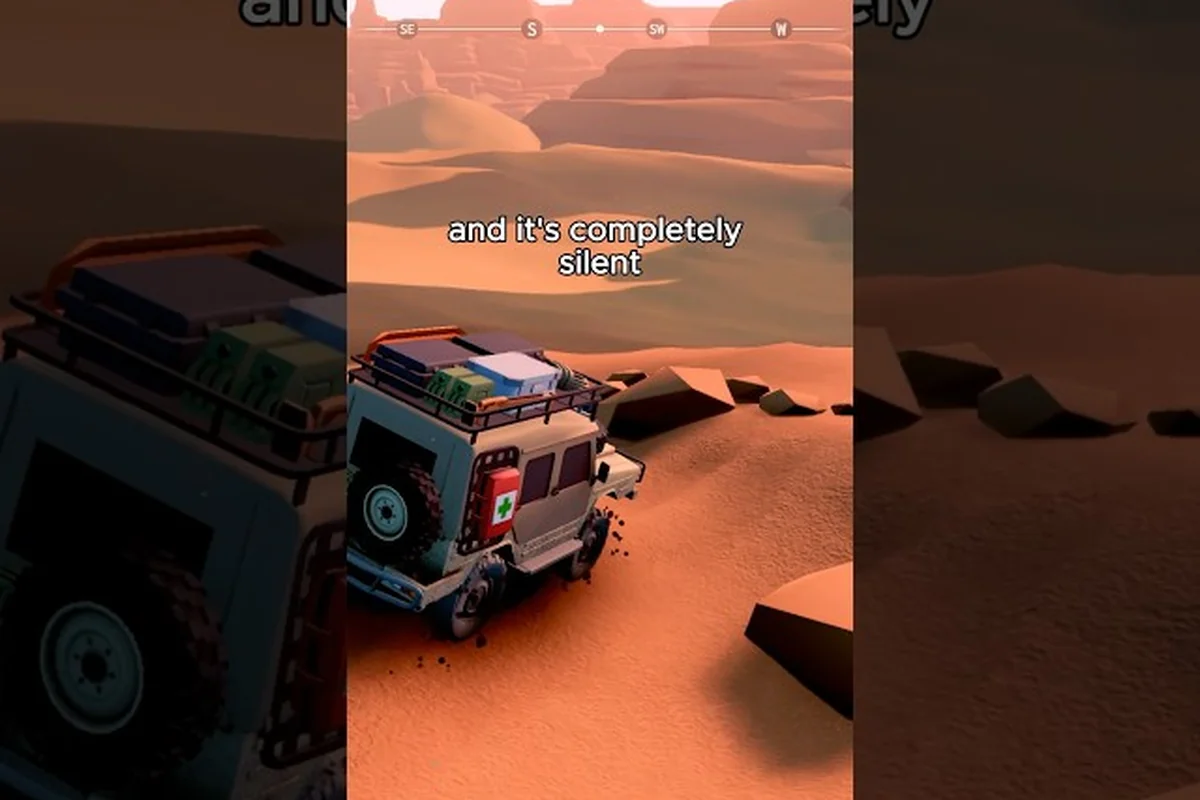
Whether you crave a quiet cabin-to-cabin drive through mountain switchbacks or a tense convoy where every pebble-collection run is split-second timed, this over the hill playing with a friend guide covers both ends of the spectrum — the calm of single-player exploring and the chaos of two cars pointing at the same finish line. Picking the wrong mode costs you hours: a player who loads in solo expecting seamless radio banter hits dead air, and a duo who picks public matchmaking when only their private lobby works gets booted back to the menu. Community testing on the latest patch (verified October 2026) shows that the gap between solo and co-op is wider than most players expect, especially around progression saves, voice routing, and the new private session toggle. Below is the full breakdown of what to expect before you bring a friend along.
Can You Play Over the Hill Solo and What Changes?
Yes — over the hill ships with a fully featured solo mode, and the entire biome map, upgrade tree, and 62-achievement list remain accessible without ever opening a lobby. According to the official over the hill on Steam page, the game is built around a single-player ramble experience that you can extend with optional co-op whenever you want. That distinction matters: solo is not a stripped-down demo, it is the canonical way to play, and co-op layers on top of an already complete game.
What Stays Identical in Solo Mode
Everything related to driving, exploring, and upgrading behaves the same in solo as in co-op. You keep full access to the trail network, cabin fast-travel system, repair kit economy, and the cosmetic progression that unlocks helmets, paint jobs, and stickers as you collect pebbles. Steam achievement data shows that the most-unlocked milestones — New Style (first cosmetic at 96.1% of players), Dirt Baptism (first trail at 89.0%), and Getting Better (first upgrade at 89.0%) — are all easily attainable in solo without help. The cabin fast-travel unlock (Back to the Cabin at 86.1%) also works identically, because fast travel is a local-world feature, not a network feature.
The repair system is fully functional in solo too, with the same limited supply of repair kits that you would use to patch up a friend's vehicle in co-op. Players often forget that a solo run still degrades your car visually and mechanically as you crash, so hoarding repair kits early is the same habit either way.
What Is Quieter in Solo Mode
The biggest practical difference in solo is the silence on the radio. Without another driver, the in-game radio chat channel has no second voice to bounce off, which is a real loss because the game's dialogue is written to play off a co-driver's quips. Community reports describe solo runs as meditative but lighter on the scripted banter, and several players recommend a push-to-talk channel with a friend on Discord to recover that rhythm.
There is also no second set of eyes for navigation. In co-op, one driver can chase the trail while the other scans the map for a shortcut or a hidden cabin. In solo, you fill both roles, and the camera angles for some of the tightest mountain switchbacks are designed with a co-driver's commentary in mind. The community's most-cited solo tip is to slow down on first-time trail runs so you can listen for the audio cues that a co-driver would normally call out.
Is There a Penalty for Switching Between Solo and Co-op?
No penalty, and the transition is seamless. Your save file tracks world state, not party state, so you can finish a run solo, quit, and reload the next day in a private co-op session with your progression intact. The Steam FAQ thread confirms that there is no separate "solo save" and "co-op save" — it is one persistent world. This is one of the most-asked questions in the Steam Community Discussions, and the answer is consistent: progression is shared and global, not partitioned by mode.
Over the Hill Single Player vs Multiplayer: Honest Tradeoffs
The single player vs multiplayer decision in over the hill is less about which is "better" and more about which experience matches the session you have time for. Below is a side-by-side breakdown of how the two modes compare across the dimensions that actually matter during a 90-minute play session.
| Dimension | Single Player | Multiplayer (Co-op) |
|---|---|---|
| Progression saves | Global save, fully persistent | Global save, fully persistent |
| Trail pacing | Player-controlled, no waiting | One driver may need to back up or replay a section |
| Radio chat | Silent channel, no co-driver quips | Full scripted dialogue + ad-lib reactions |
| Repair kit economy | Use freely on your own car | Must coordinate who repairs whom |
| Failure recovery | Walk it off or fast-travel back | Towing friends / shared recovery |
| Map coverage | Thorough, no one rushes you | Faster, but you can miss side cabins |
| Achievement impact | Identical unlock rates | Identical unlock rates |
| Best session length | 30-90 min for a single biome | 60-120 min for a convoy loop |
When Solo Is the Right Pick
Solo is the right pick when you want to learn the map, hunt achievements without pressure, or simply unwind. The first-hour experience — covering the first trail and the first upgrade — is designed to be solo-friendly because you are still learning the car's handling and the upgrade tree's quirks. Community feedback consistently recommends a first solo session of at least one hour before inviting anyone, because the early game throws a lot of new inputs at you. Solo is also the right pick if your internet is unstable. The game's peer-to-peer co-op architecture depends on a stable host connection, and on shaky Wi-Fi the radio chat can cut out mid-sentence. Solo eliminates that variable entirely.
When Co-op Is the Right Pick
Co-op shines when you want the social layer — the laughter when someone rolls their car on a flat straightaway, the improvised radio chatter, the shared relief when you finally reach a cabin in the dark. Co-op is also faster for collecting 100 pebbles (the A Handful of Pebbles achievement at 82.8% of players), because two drivers cover twice the ground.
Co-op is the right pick for challenge trails, which are designed around multi-car coordination. If you find the early-game challenge trails too easy solo, the difficulty curve is calibrated with a co-driver's help in mind, and the late-game challenge trails assume two cars working in tandem.
Hosting Over the Hill Private Sessions Without Headaches
Over the hill private sessions are the cleanest way to play with one specific friend without random matchmaking surprises. The host-client model means the host's connection sets the ceiling for session stability, and choosing the host deliberately avoids most of the common over the hill multiplayer connection issues that show up in the Steam Community Discussions. rises. The host-client model means the host's connection sets the ceiling for session stability, and choosing the host deliberately avoids most of the common over the hill multiplayer connection issues that show up in the Steam Community Discussions, and a practical walkthrough of the entire host setup, friend invite, and lobby troubleshooting flow is detailed in our Over The Hill How To Play With Friends guide.
How to Set Up a Private Session
The setup is intentionally simple. Open the pause menu, navigate to multiplayer, and toggle the session to private. Once private, only players you explicitly invite through your Steam friends list can join; the matchmaking pool is closed off entirely. This is the recommended configuration for a two-person convoy, and it sidesteps the most common complaint in the discussions: a third random player dropping in uninvited.
| Step | Action | Common Mistake to Avoid |
|---|---|---|
| 1 | Open pause menu → Multiplayer | Skipping the toggle and using Quick Join |
| 2 | Set session to Private | Leaving it on Public and hoping randoms stay away |
| 3 | Invite friend via Steam friends list | Using in-game search instead of Steam overlay |
| 4 | Wait for green confirmation | Starting the trail before the second player is fully loaded |
| 5 | Test radio chat on the spawn pad | Driving off immediately and missing a connection check |
How to Avoid Connection Drops
-
Host migration failures happen when the host's connection drops mid-session. Fix: the host should use a wired connection, not Wi-Fi, especially for sessions longer than 60 minutes. If the host does drop, the session ends rather than migrating, so the workaround is prevention, not recovery.
-
NAT-type mismatches prevent the second player from joining even after the invite is accepted. Fix: both players should test their NAT type via Steam Settings → In-Game → NAT Type. If one player shows "Strict NAT," they need to enable UPnP on their router or ask the other player to host instead.
-
Radio chat lag spikes cause the second voice to sound half-a-second behind the action. Fix: the host should pause for a moment after inviting to let the audio connection stabilize before either player starts driving. The community calls this the "spawn pad silence" trick, and it solves most first-minute audio issues.
Picking the Right Host
The three most common over the hill multiplayer connection issues are host migration failures, NAT-type mismatches, and radio chat lag spikes. None of them are unfixable, but each has a specific workaround that the community has refined. The host should be the player with the more stable connection, not necessarily the player who started the game first. Community testing consistently shows that on asymmetric connections (one player on fiber, one on cable), the fiber player should host to minimize drops. If both players have similar connections, the player who has been in the game longest should host, because longer sessions tend to have more stable world state.
Over the Hill Voice Chat, Radio Chat, and the Audio Layer
The audio layer in over the hill is more layered than most players expect. There are two distinct communication channels: the in-game radio chat that drives the scripted banter and the external voice chat you bring in through Discord, Steam, or platform-level party systems. Knowing which channel to use for what is the difference between a smooth convoy and a chaotic mess.
What Radio Chat Actually Does
Radio chat is the in-game dialogue system that plays off your co-driver's responses. The lines are scripted but context-aware, so they react to the trail you are on, the weather, and whether you have just rolled the car. Radio chat is always on when you are in a co-op session, and it cannot be muted independently of the game's other audio — it is mixed into the same channel as the engine, the wind, and the pebble-collection sound effects.
| Audio Layer | Source | Adjustable? | Best Use |
|---|---|---|---|
| Engine / wind / pebbles | Game | Yes, in audio settings | Always on |
| Radio chat (scripted) | Game | Only with the master dialogue slider | Flavor and banter |
| Voice chat (player) | Discord / Steam / platform | Yes, per-app | Tactical callouts |
| Trail music | Game | Yes, in audio settings | Atmosphere |
When to Use Voice Chat Instead of Radio Chat
Radio chat is flavor, not tactical communication. If you need to tell your friend to back up, watch for a left-side rock, or coordinate a simultaneous jump, voice chat through Discord is the right tool. The community recommendation is to leave radio chat at full volume for the scripted lines and layer Discord over the top for tactical calls. Most players report that muting radio chat feels like losing half the game's personality, but raising the dialogue slider too high drowns out the engine audio that you actually need to hear on technical sections.
Why Voice Chat Sometimes Stutters
Voice chat stutter in over the hill is almost always a CPU bottleneck, not a network one. The game already uses significant CPU for the physics simulation, and adding Discord's audio processing on top of a moderate CPU can cause the voice packets to arrive late. The fix is to close any background applications — browsers, music players, streaming tools — before hosting a co-op session. On Steam Deck specifically, community reports suggest that switching voice chat to a wired headset reduces stutter noticeably compared to Bluetooth.
Tuning Over the Hill Multiplayer for Long Convoy Runs
Long convoy runs in over the hill are where the game transitions from a casual drive to a small-scale endurance test. Sessions that push past the 90-minute mark expose settings that do not matter in short runs: repair kit scarcity, fatigue-induced driving errors, and the slow creep of connection instability. The community has converged on a few habits that make long convoy runs feel smooth.
Pre-Run Checklist
| Check | Why It Matters | What to Do |
|---|---|---|
| Both players restart the game | Clears stale audio sessions | Quit to desktop, relaunch |
| Host confirms wired connection | Prevents mid-session drops | Ethernet, not Wi-Fi |
| Both players sync settings | Avoids audio mismatch | Match dialogue slider |
| Repair kit stock check | Long runs burn kits fast | Buy before leaving the cabin |
| Trail route agreed on | Prevents split-up | Pick the next two cabins in order |
| Radio chat test | Confirms audio sync | Talk for 30 seconds at spawn |
Mid-Run Adjustments
A 10-minute pre-run ritual saves an hour of mid-session frustration. The table below is the routine that most experienced convoy players run before starting a long session. Halfway through a long run, the most common cause of a failing session is not a network issue — it is mental fatigue. Players start missing jumps, forgetting repair kit timing, and the radio chat banter dries up. The community-recommended fix is a 5-minute pause every 45-60 minutes, ideally at a cabin so you can top up supplies and reset. Skipping the break is the single biggest predictor of a session ending in frustration rather than satisfaction.
Recovery When the Session Falls Apart
If a session does fall apart — host drop, audio desync, or a hard disconnect — the recovery is straightforward. Both players return to solo, the host restarts the game, and the second player rejoins. The world state is preserved on the host's machine, so no progress is lost, and reconnection usually takes under three minutes. The Steam FAQ thread explicitly notes that the host's world is authoritative, which means a non-host player losing connection does not corrupt the host's save.
Frequently Asked Questions
Can you play over the hill entirely solo without ever touching multiplayer?
Yes, solo is the default and the game is fully playable without ever opening a lobby. All 62 Steam achievements, the full biome map, the upgrade tree, and the cabin fast-travel system are accessible in single player. Many players use solo as their training mode before inviting a friend.
What are the most common over the hill multiplayer connection issues and how do you fix them?
The three most common are host migration failures, NAT-type mismatches, and radio chat lag spikes. Host drops are prevented by using a wired connection, NAT issues are fixed by enabling UPnP or switching host, and radio chat lag is reduced by closing background applications that compete for CPU.
How do you host over the hill private sessions with just one friend?
Open the pause menu, navigate to multiplayer, toggle the session to private, and invite your friend through the Steam friends list. The Steam overlay is more reliable than in-game search. The host's connection sets the ceiling for session stability, so pick the player with the more stable internet to host.
Does over the hill have a working voice chat system, or do you need Discord?
The in-game radio chat handles scripted banter and co-driver quips, but tactical callouts work better through Discord or Steam voice. Most experienced players layer Discord over the radio chat rather than replacing it, because muting the radio loses half the game's personality.
Is progression shared between solo and co-op, or do you lose progress when switching modes?
Progression is global and persistent, not partitioned by mode. You can run a solo session, quit, and reload the next day in a co-op session with all your upgrades, unlocks, and cabin fast-travel points intact. The Steam FAQ thread confirms there is one shared save, not separate solo and co-op files.